Practice Soccer Drills for 5 Year Olds: Short, Visual, and Easy for Parents or…
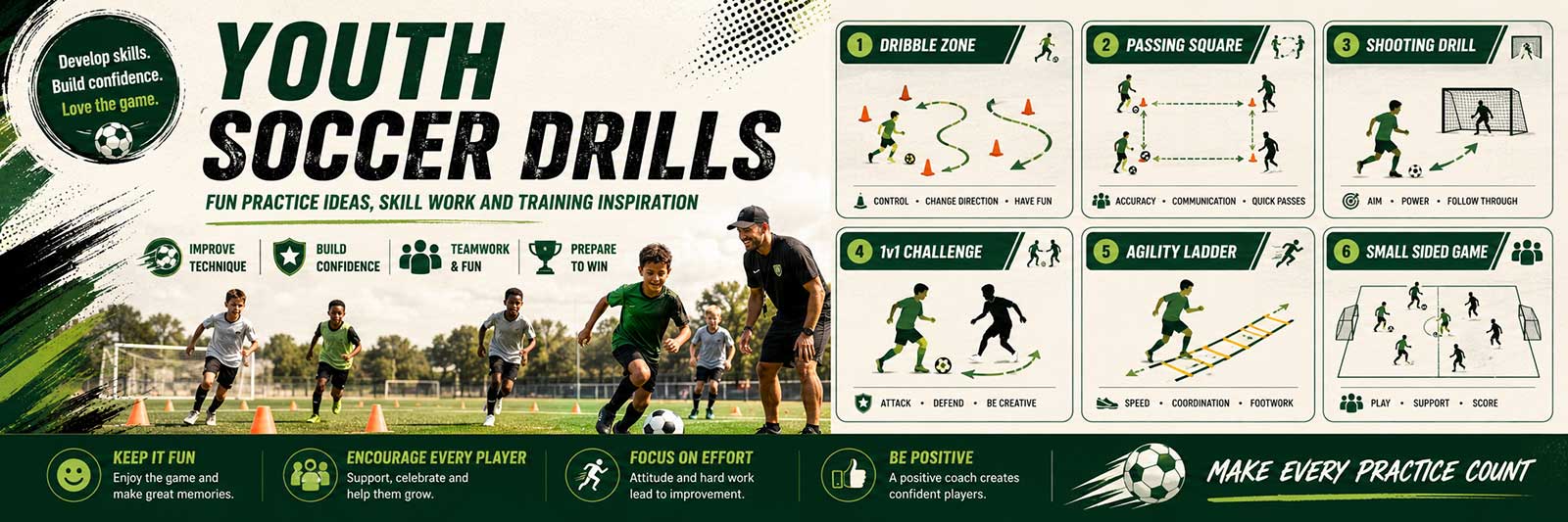
Running practice soccer drills for 5 year olds should be short, visual and easy to run. For parents and new coaches that means brief activity windows, clear demonstrations, one ball per child and game-like formats that keep everyone involved.
Quick answer
Plan a 30–45 minute session; run very short activities (about 4–6 minutes each); keep one ball per child, use demonstrations and visual cues, and build the session around fun, small-sided play.
What this guide covers
- Why short, visual drills match 5-year-old attention and skill needs.
- How to organise practice so every child gets lots of touches.
- Practical coaching language, demonstrations and simple progressions.
What beginner coaching drills really need to do
At U6 the primary coaching aim is ball familiarity and comfortable movement — dribbling, running with the ball and basic receiving — delivered through play. Drills for this age should be game-like, focus on one simple skill at a time, and create repeated, successful touches rather than long technical sequences. Keep the objective visible: a child should understand what to do in seconds, try it, and get immediate repetition.
Simplicity, clarity, and attention span
Authoritative guidance for U6 recommends sessions of about 30–45 minutes. Individual activities should be very short to match attention spans: switch every ~4–8 minutes (many sources advise about 4–6 minutes). Use a maximum of one clear instruction before each activity. If kids look lost, stop, demonstrate quickly and restart—the shorter the explanation, the better.
Session organisation and repetition without chaos
Set up before players arrive so transitions are quick. Arrange activities that allow one ball per child to minimise waiting. Short stations or rotating small-sided games work well: limit lines, avoid elimination games, and ensure every child is active during each block. Keep breaks and transitions brief — the goal is many short repetitions rather than a few long attempts.
Correction, demonstration, and coaching language
Verbal instructions must be minimal. Demonstrate every activity visually; children learn faster by watching and copying. Use very simple cues (e.g., “touch, look, go”) and praise specific actions (“good touch” or “quick feet”) rather than general statements. When correcting, show the correct movement immediately and let the child try again—avoid long technical lectures.
Fun, confidence, and keeping players engaged
Games and imaginative tasks build engagement and reduce resistance to practice. Use playful themes (races, tag-with-ball, treasure-collecting) that naturally encourage dribbling or running with the ball. A focus on achievable tasks and frequent success conditions (small goals, short races) builds confidence because children experience control and immediate reward.
One ball per child and small-sided formats
Best practice guidance for U6 stresses one ball per child to maximise touches. Where team play is introduced, use small-sided formats (for example 4v4 without a goalkeeper in common U.S. models) so players are involved in both attack and defence and get many ball interactions. Small-sided games are more game-like and transfer directly to match comfort than long isolated technical drills.
Common mistakes new coaches make
Typical errors include over-talking, long drills that exceed attention spans, letting children stand in line too much, and trying to teach several skills at once. Another common mistake is using elimination or extended waiting periods. Keep things moving, keep instructions short, and prioritise activities where every player moves and touches the ball frequently.
How to progress a drill without losing the group
Progress by small, visible changes: shorten or lengthen the playing area, add a simple scoring condition, or ask for one extra touch of control before moving. Avoid adding complex tactical demands. If a progression slows or confuses the group, revert immediately to the previous, simpler version—maintaining rhythm and enjoyment is more valuable than forcing a technically perfect repetition.
Foundations that transfer into real play
Choose drills that rehearse match-like problems: keeping the ball while moving, scanning for space (even if only briefly), and receiving under light pressure. These small tasks replicate decisions players face in a 4v4 game and build comfort. The mechanism is simple: many short, successful repetitions under playful pressure make the movement and decision easier to execute during real play.
Closing interpretation
For parents and new coaches, the reliable recipe for practice soccer drills for 5 year olds is short sessions (30–45 minutes), very short activity windows (about 4–6 minutes), one ball per child, quick transitions and clear demonstrations. Prioritise playful, small-sided game formats and use concise coaching language so children stay active, get lots of touches and leave practice enjoying the sport.
Author: Alex R.