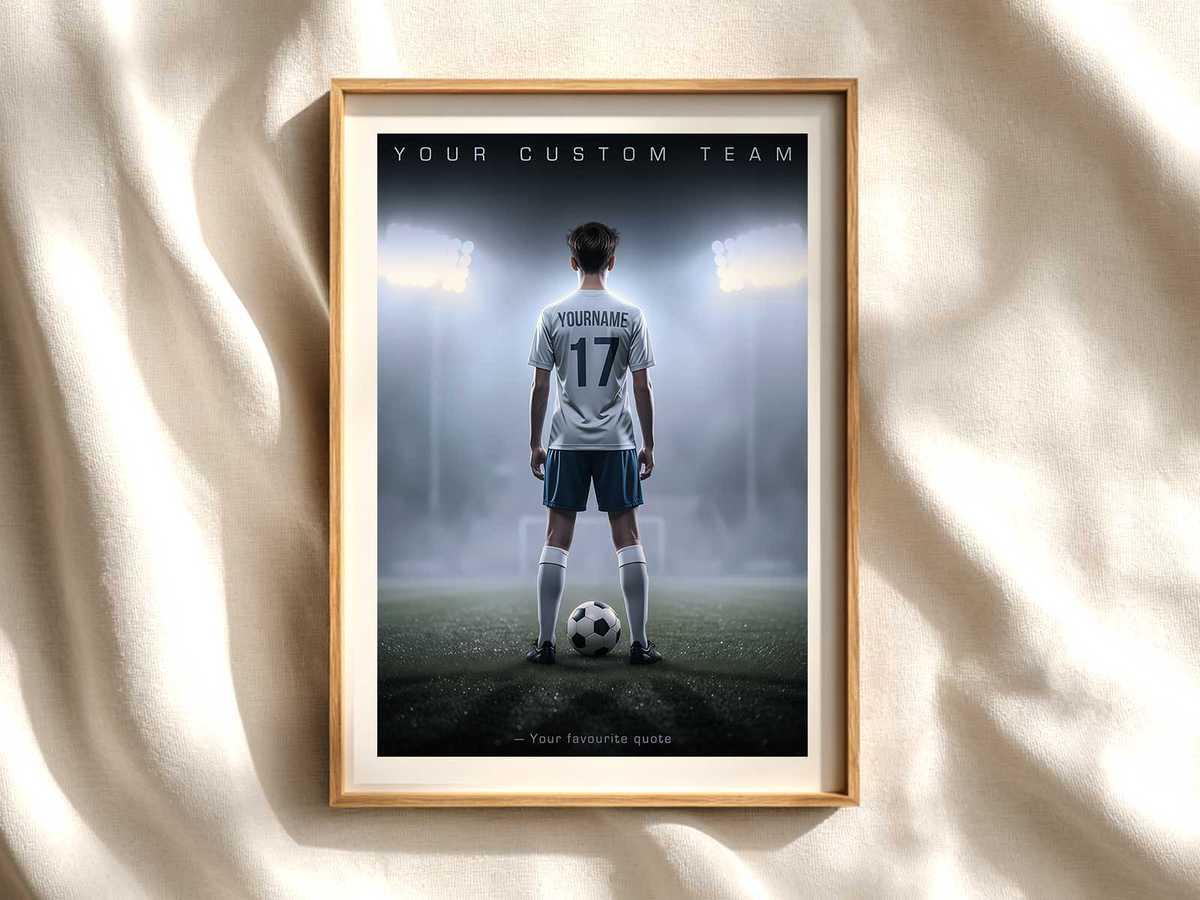
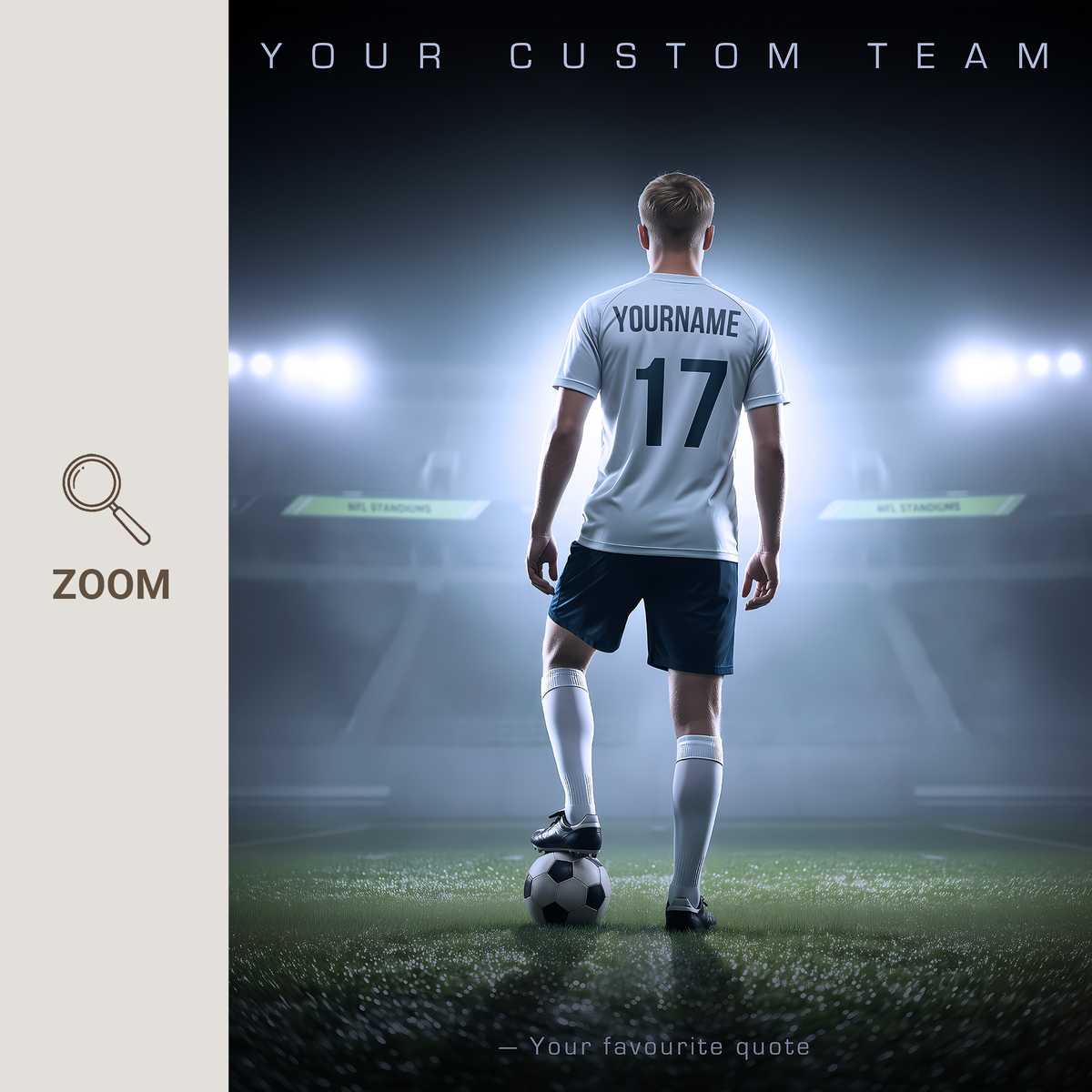
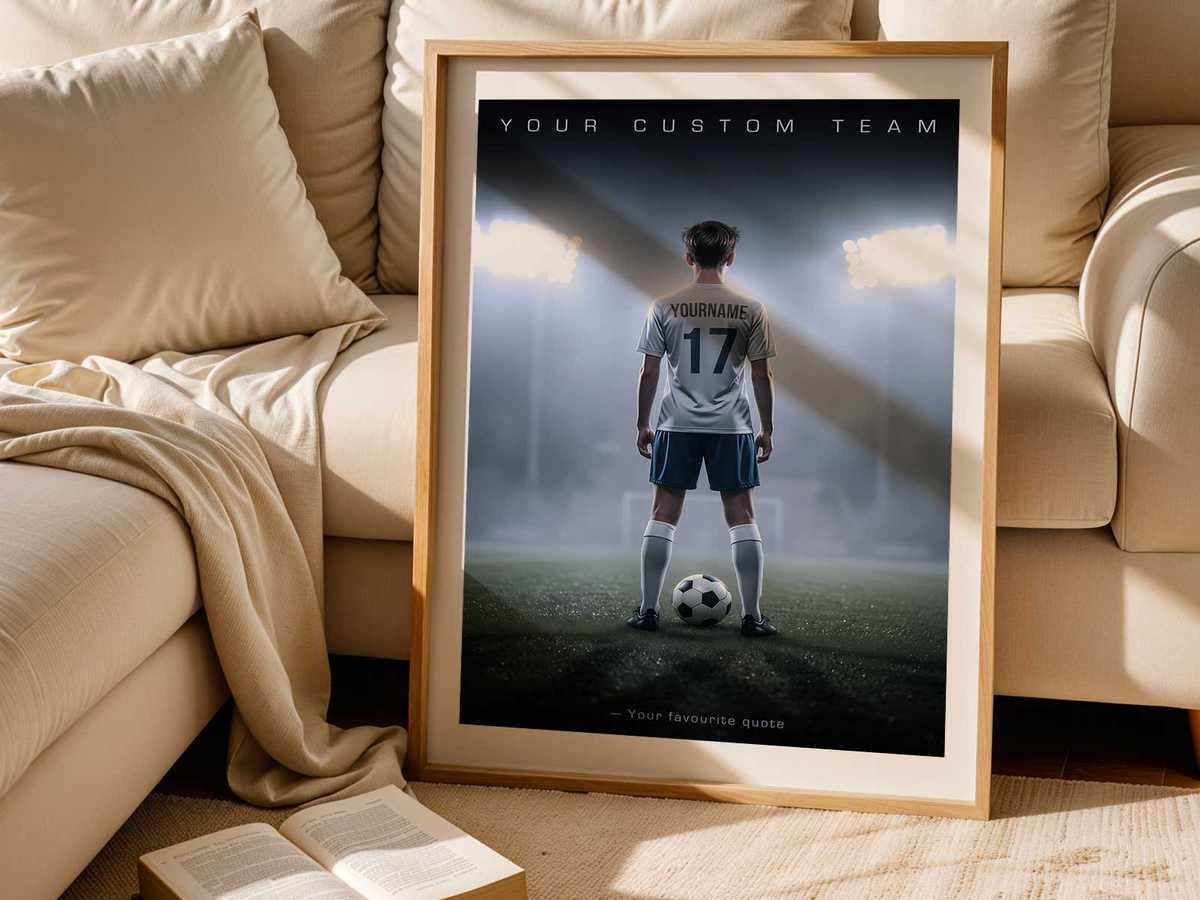
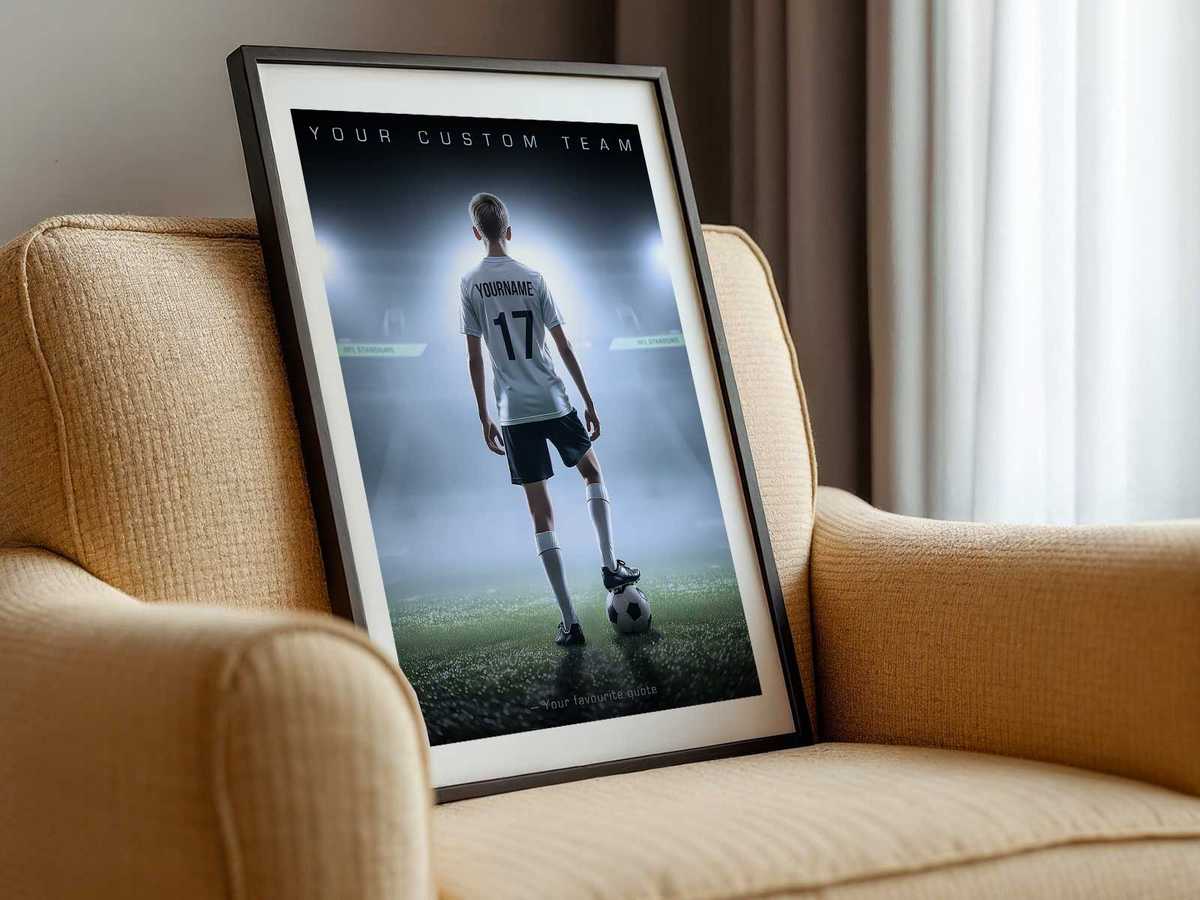
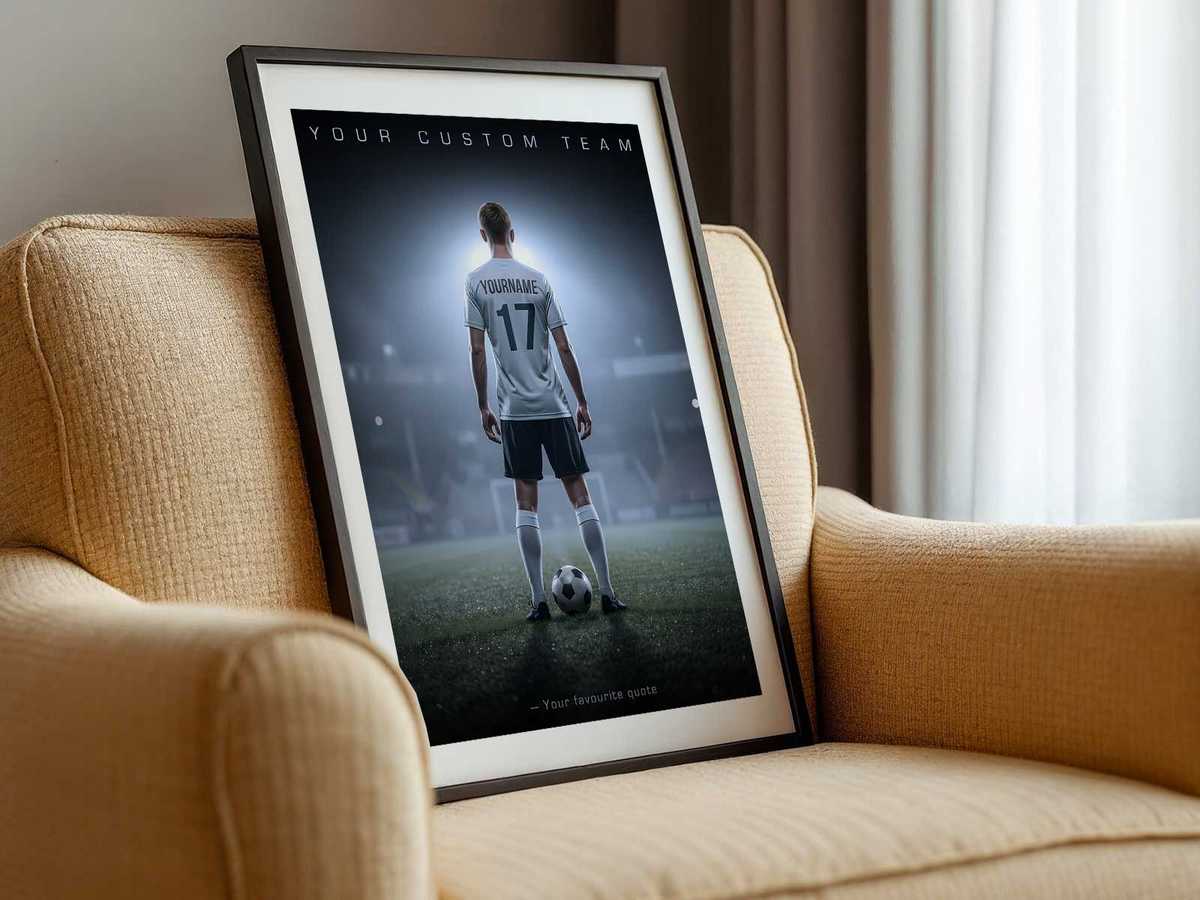
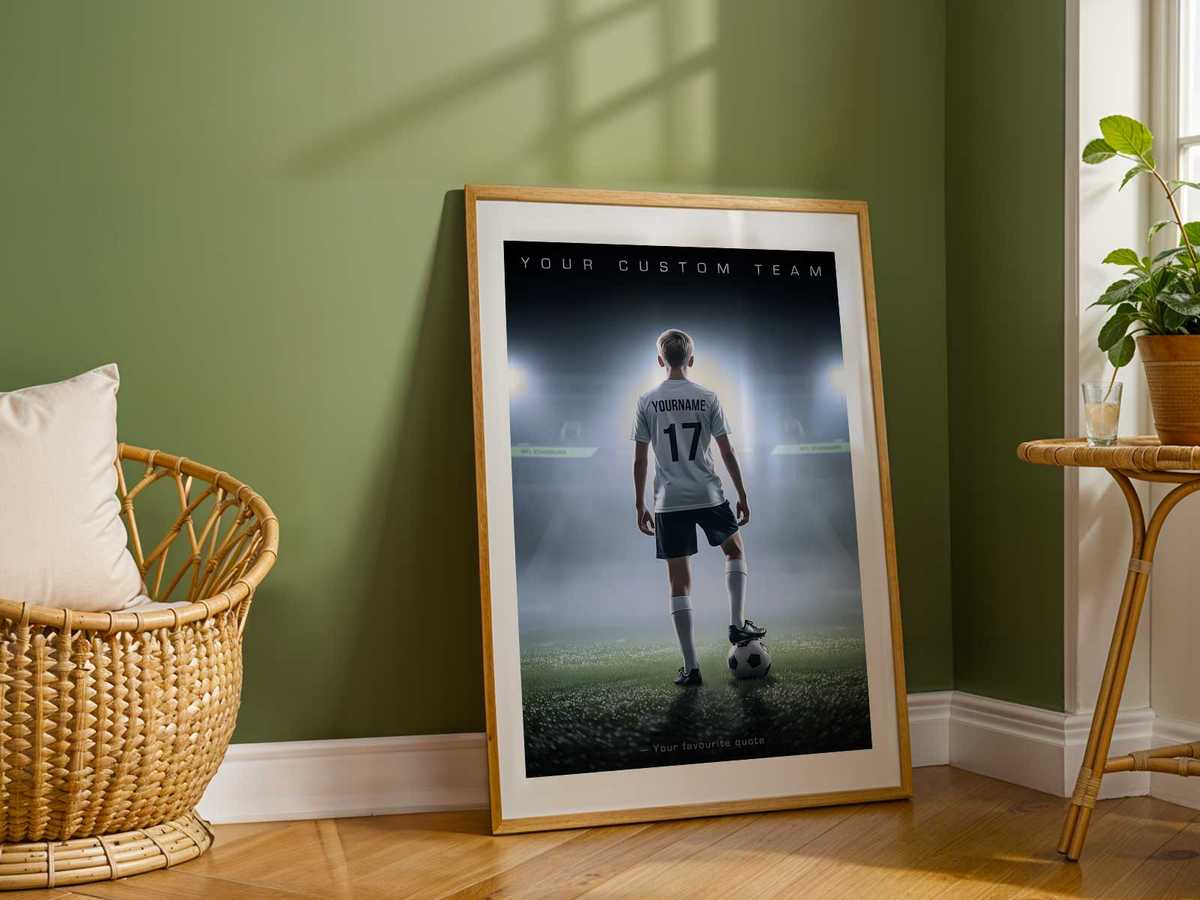
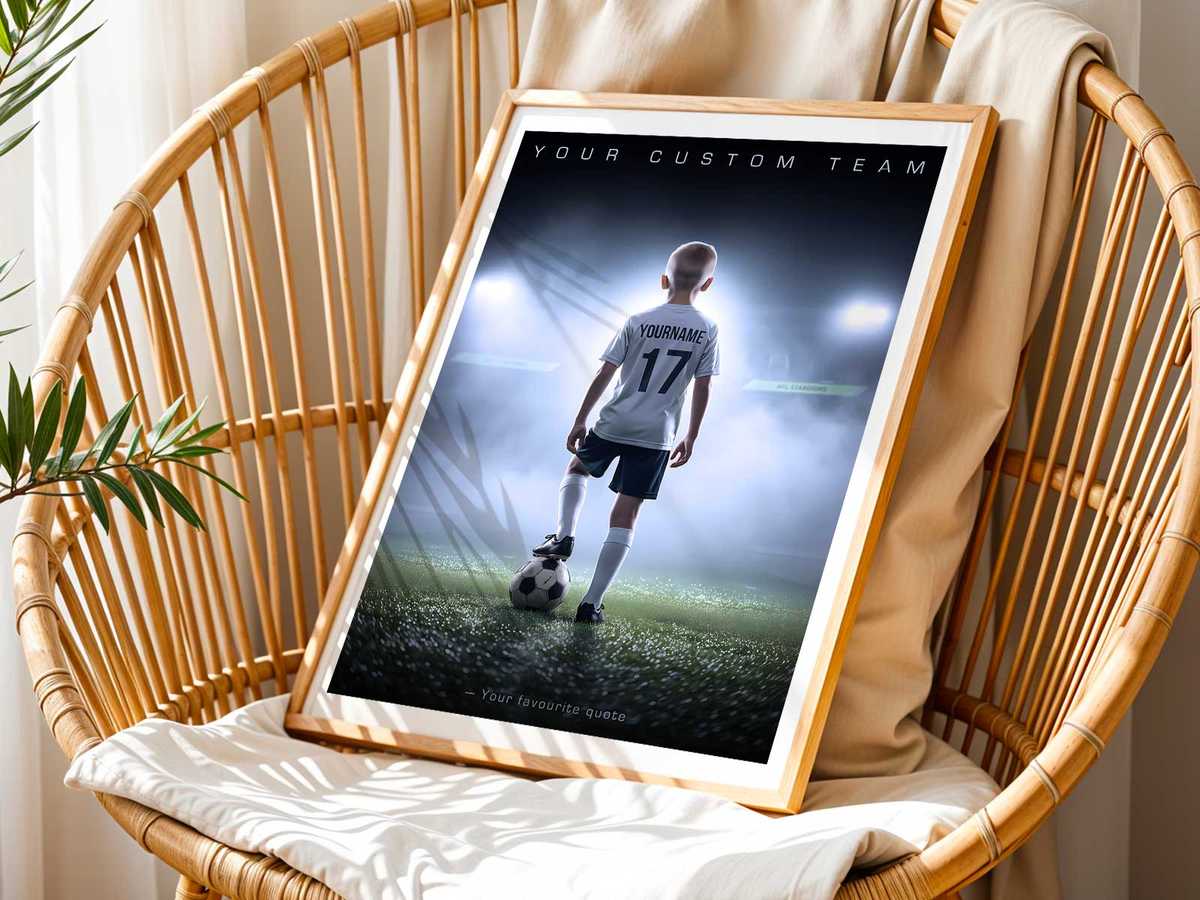
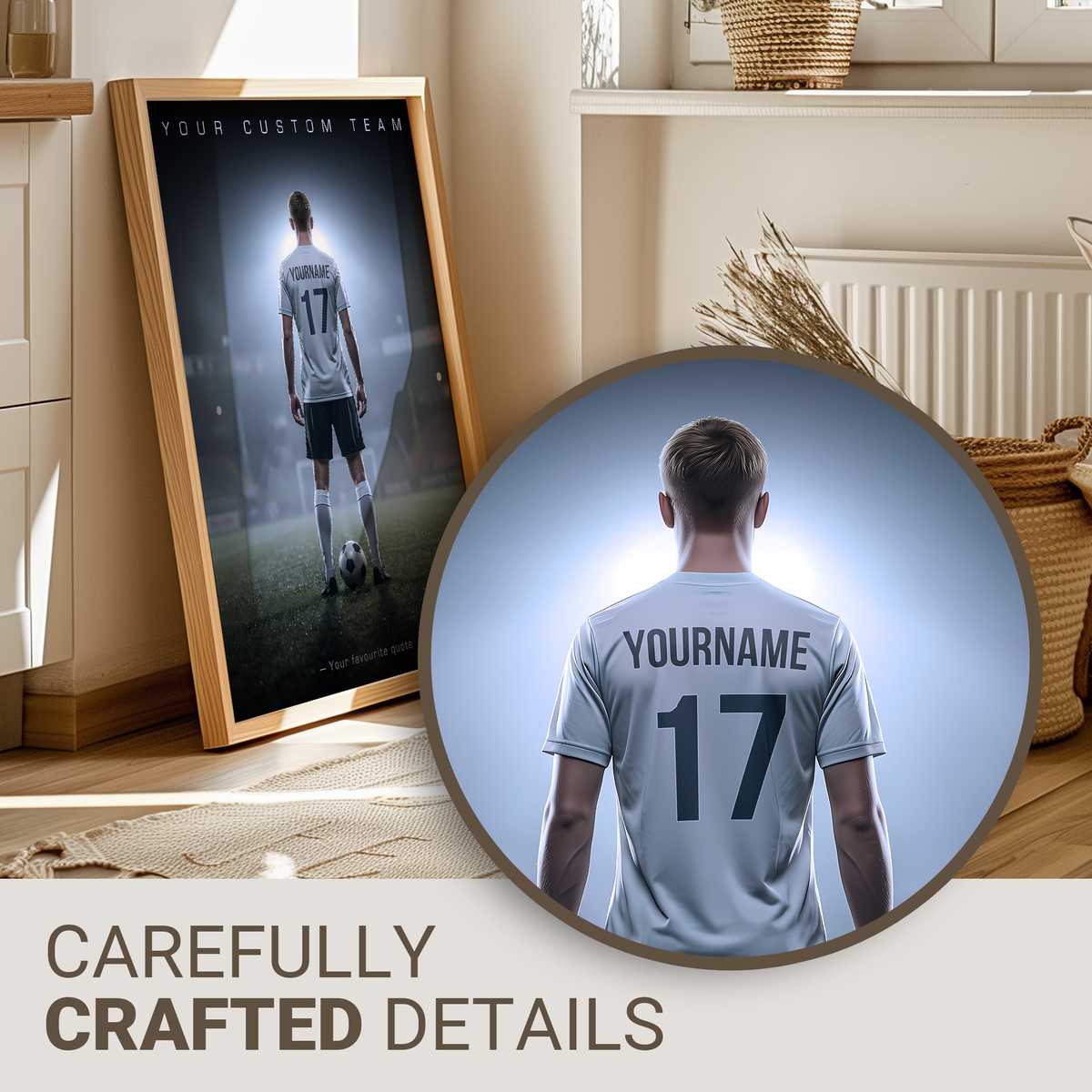
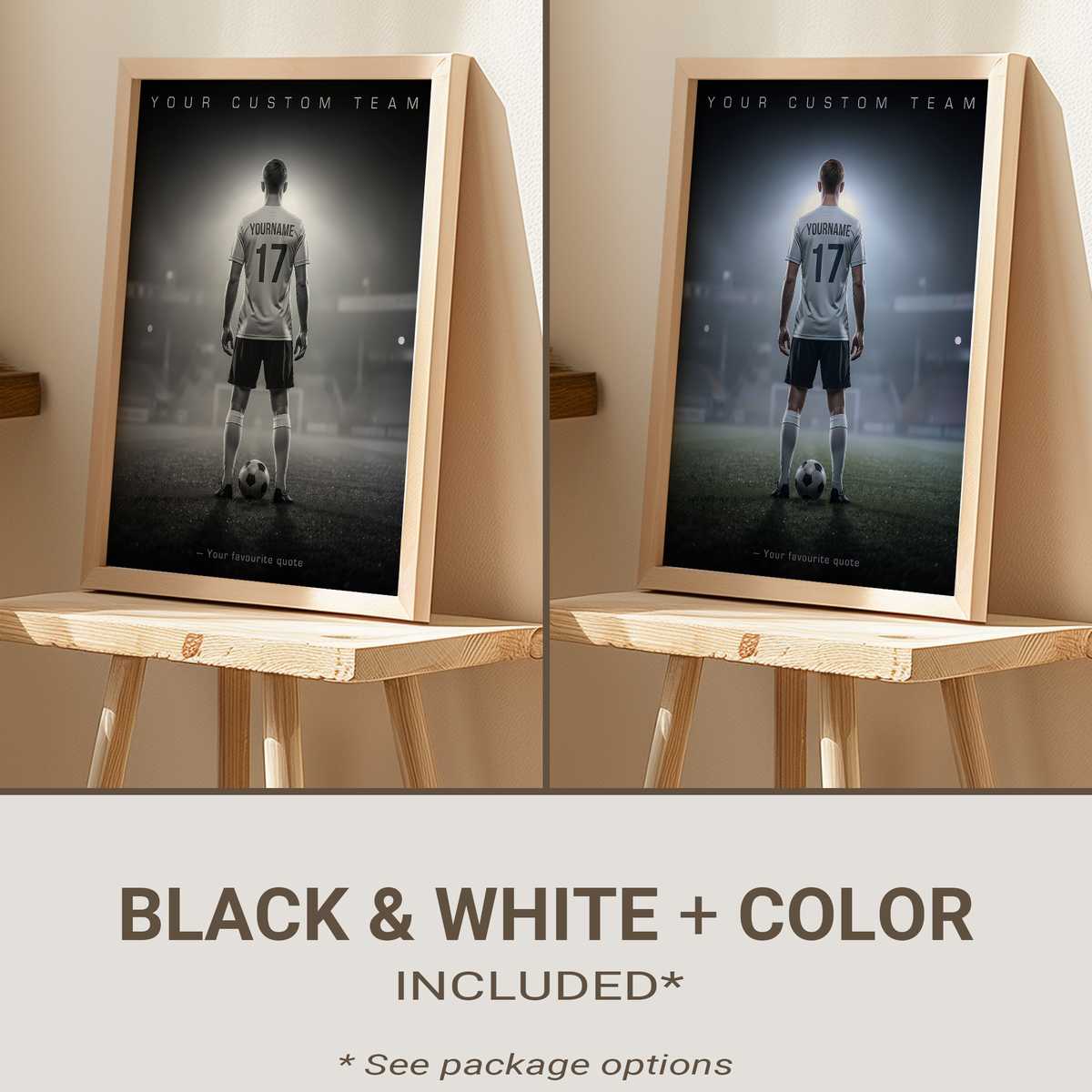
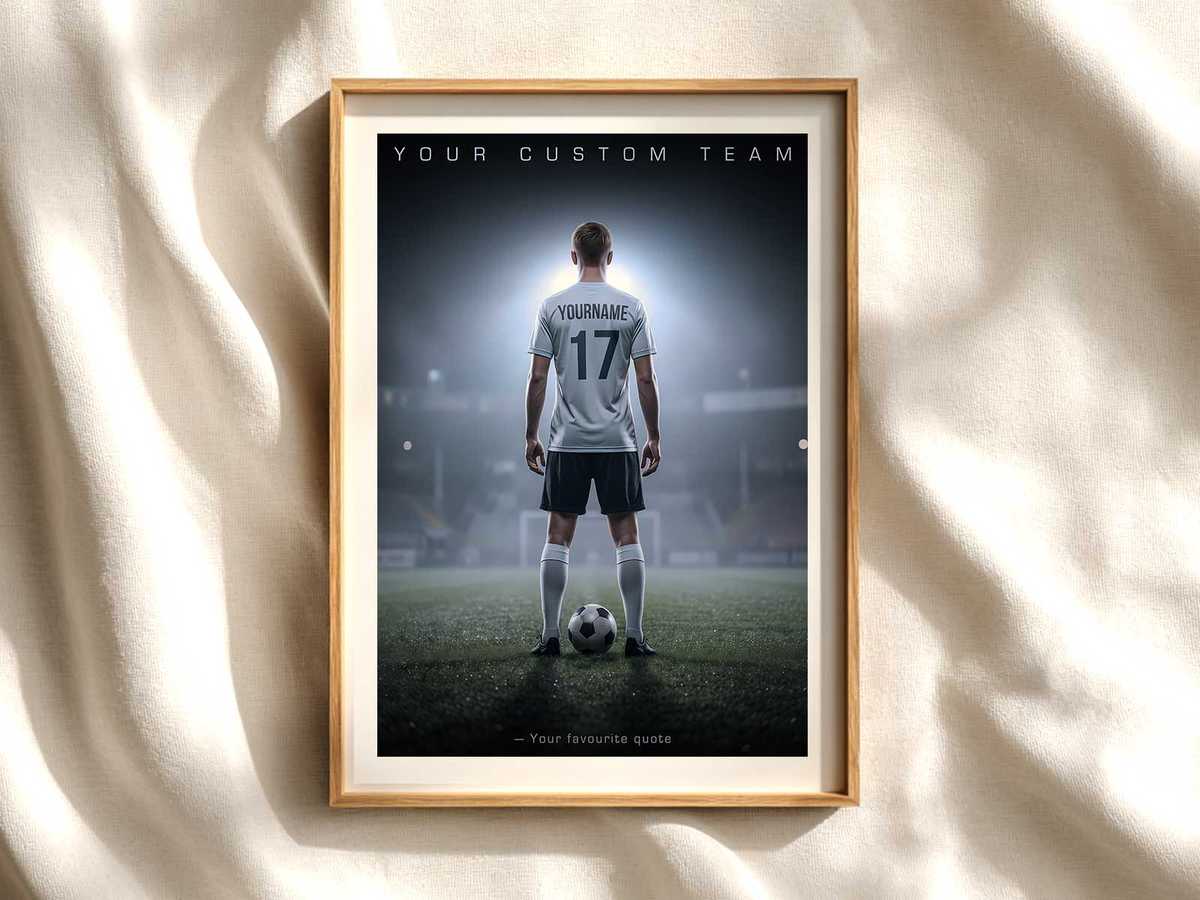
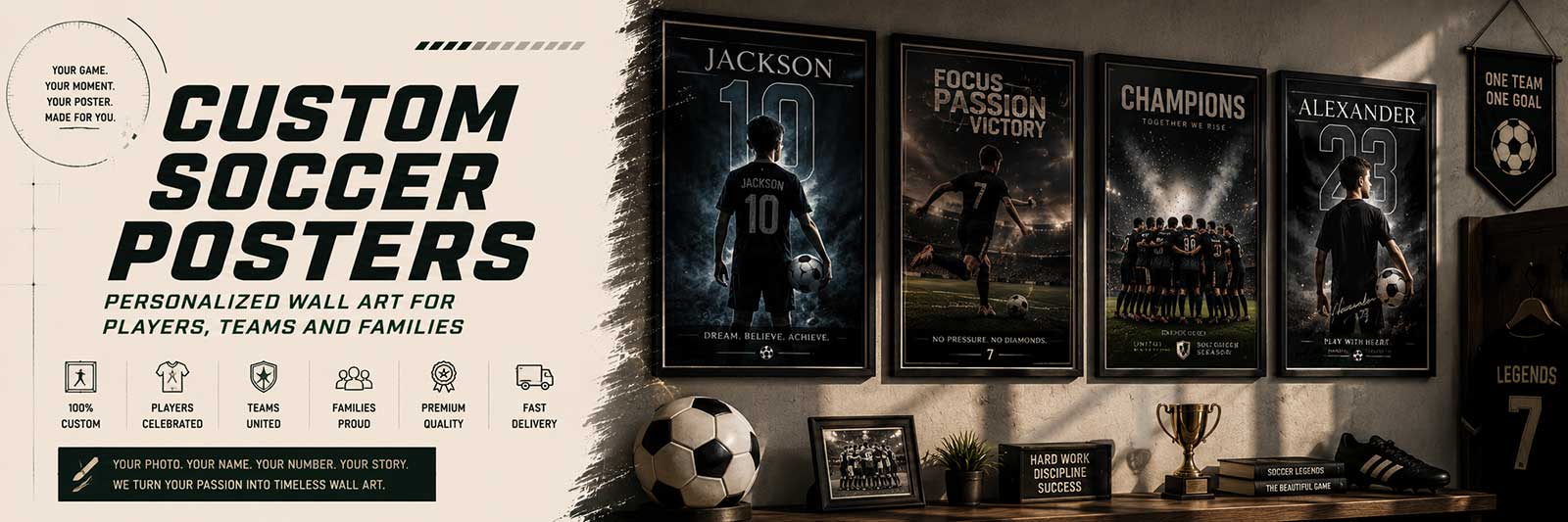
Turning a single game moment into a homemade soccer poster creates more than wall decor — it turns a memory into a physical keepsake. When a poster captures an identifiable moment (a game-winning goal, a trophy lift, a sideline celebration) and combines simple personal details like player name, number, date, and a short caption, it moves from a generic print to something emotionally specific and narratively rich. Commercial keepsake guides recommend these concrete identifiers because they anchor the image in a particular time and story, so every glance at the poster recalls effort, context, and pride.
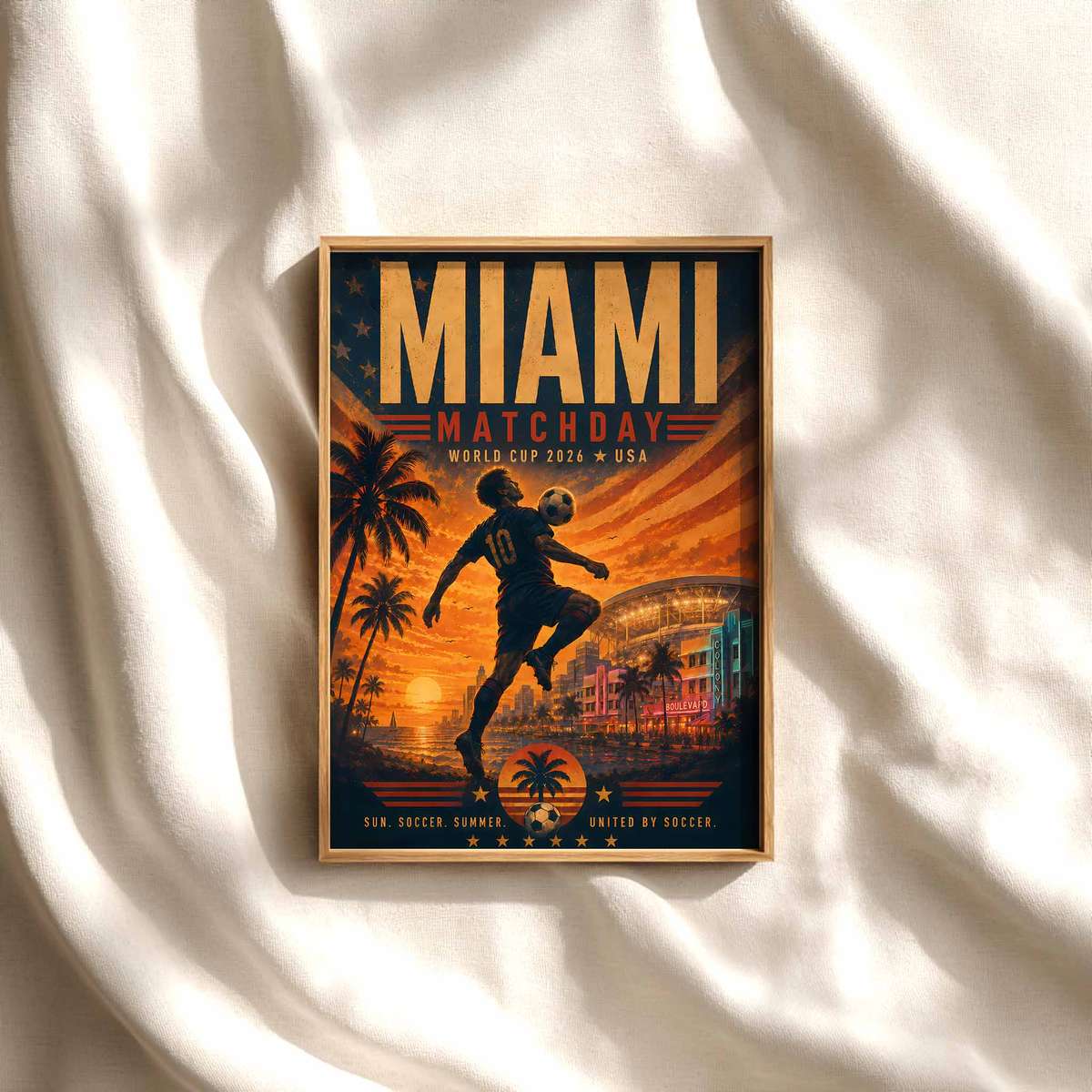
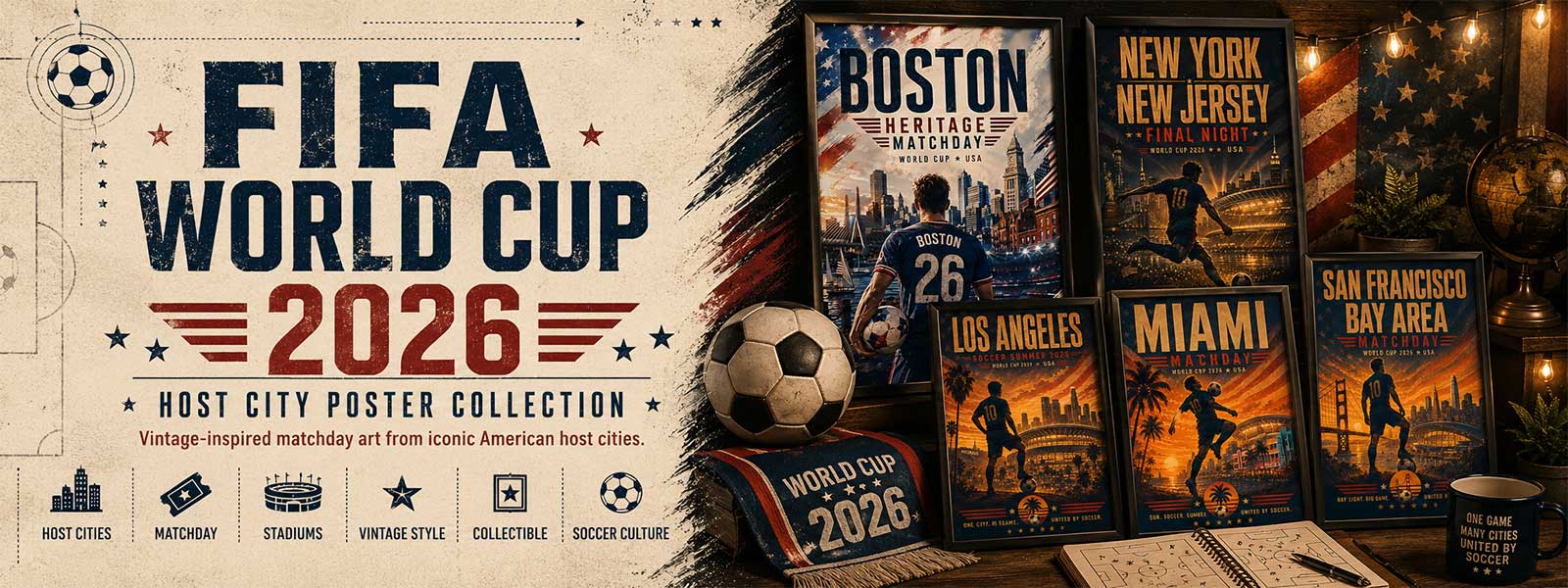
Design choices matter. Visual guidance from design platforms and template resources shows that a clear visual hierarchy, a large hero image, bold sans-serif sports typography, a restrained color palette, and well-used negative space direct attention to the defining moment. These practices make the poster readable at a distance, help the important details stand out, and give the piece the clean, strong look that works well as wall art in a bedroom, locker area, or game-room display.
Adding physical ephemera and short captions deepens the narrative. Including a ticket stub, a program snippet, or a handwritten note alongside the photo gives the poster additional context and emotional texture; memory guides recommend this to turn a photo into a documented moment. A concise caption — the score, opponent, or a sentence about what the moment meant — provides the kind of specificity that transforms an image into a story you can pass on.
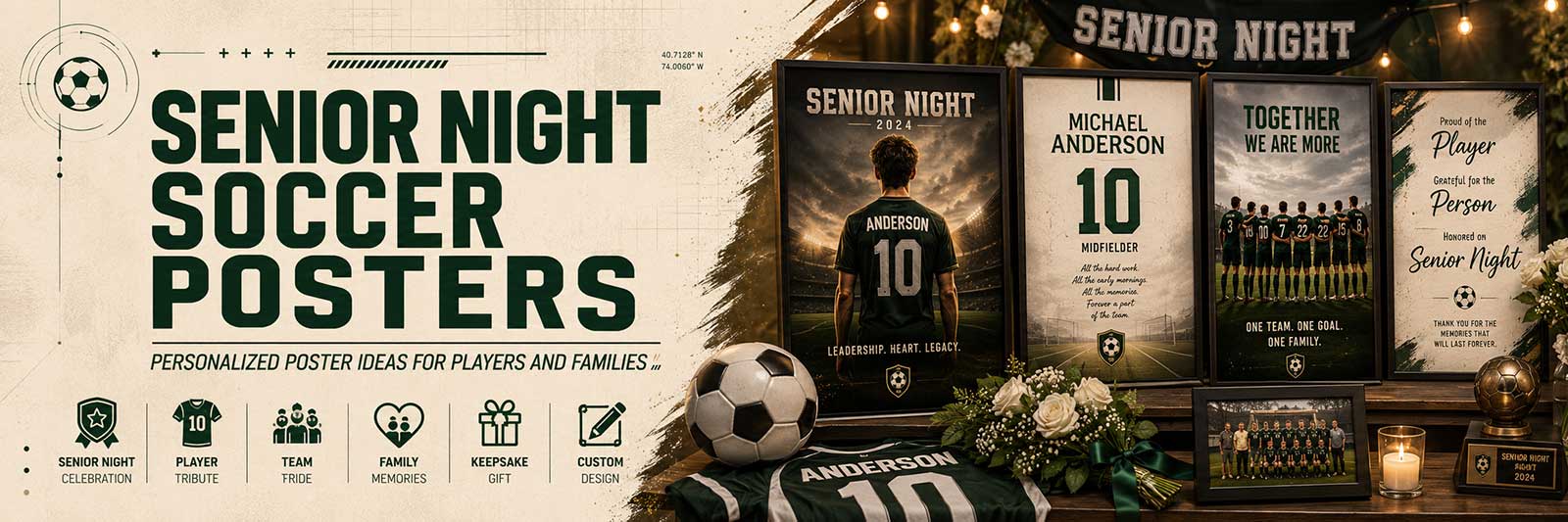
[IMAGE_INSERT_ARTICLE_01]
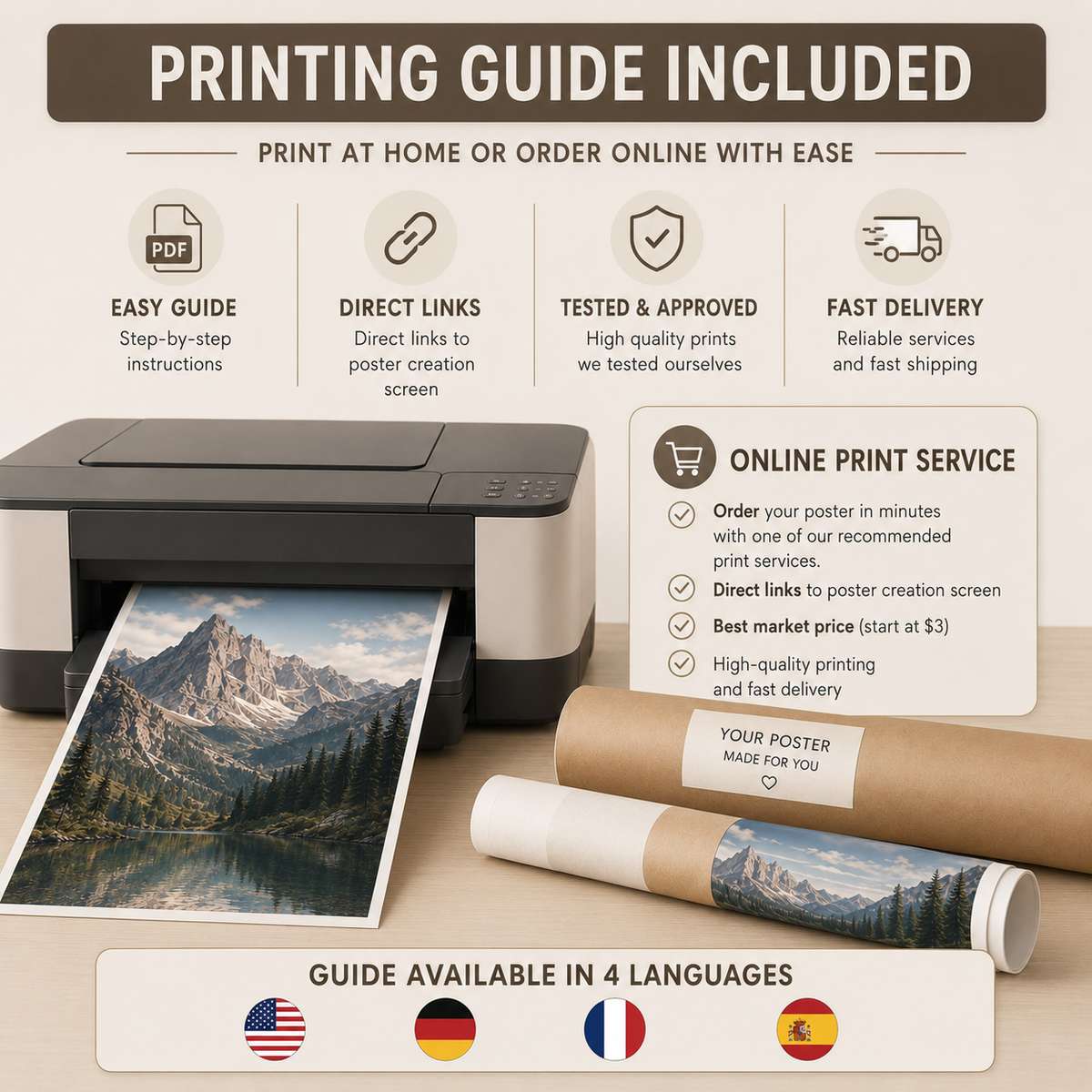
Practical tools make professional-looking results achievable without advanced design skills. Template platforms and simple production techniques such as background removal and layout grids are commonly used to create polished posters quickly. These consumer tools let parents, players, and coaches focus on selecting the right hero image and the concrete details that matter rather than wrestling with complex software.
Preservation is part of making the poster a lasting keepsake. Conservation guidance from archives and conservation centers recommends using archival (acid-free) matting and backing, UV-filtering glazing, and avoiding direct sunlight for long-term display. Institutions also advise digitizing originals with high-resolution scans or photos so you can make display copies while protecting the original item. Following these approaches helps a homemade poster remain a readable, well-preserved memory for years.
Finally, the combination of identity, moment, and care explains why a homemade or moment-inspired poster feels more personal than generic sports decor. Concrete details — the player’s name and number, the season or date, a single strong visual anchor — create an object that marks growth and belonging. Whether tucked above a bed, mounted in a locker room, or grouped on a memory wall, a poster built this way reads as a record of effort and pride rather than as anonymous decoration. That narrative quality is what makes the piece a keepsake: it holds a known story, can be preserved, and becomes a visual prompt for memory and belonging over time.